The Celtic Cross is famous because it can hold complexity. It is also easy to overread. The goal is not to extract ten separate predictions, but to discover the central tension and trace how it develops across the spread.
What is the Celtic Cross spread?
The Celtic Cross is a traditional tarot layout used for broad questions and situations with several interacting forces. Different teachers assign slightly different names to its positions. A consistent system matters more than finding the only correct version.
Use it for questions such as, "What should I understand about this career transition?" Avoid using ten cards when a focused three-card spread would answer a narrow question more clearly.
Before you begin
- Choose one open question and write it down.
- Decide whether you will use reversals before shuffling.
- Shuffle while returning attention to the question.
- Lay all ten cards before interpreting any one card.
- Record the layout so you can review it later without pulling clarifiers immediately.
The Celtic Cross layout
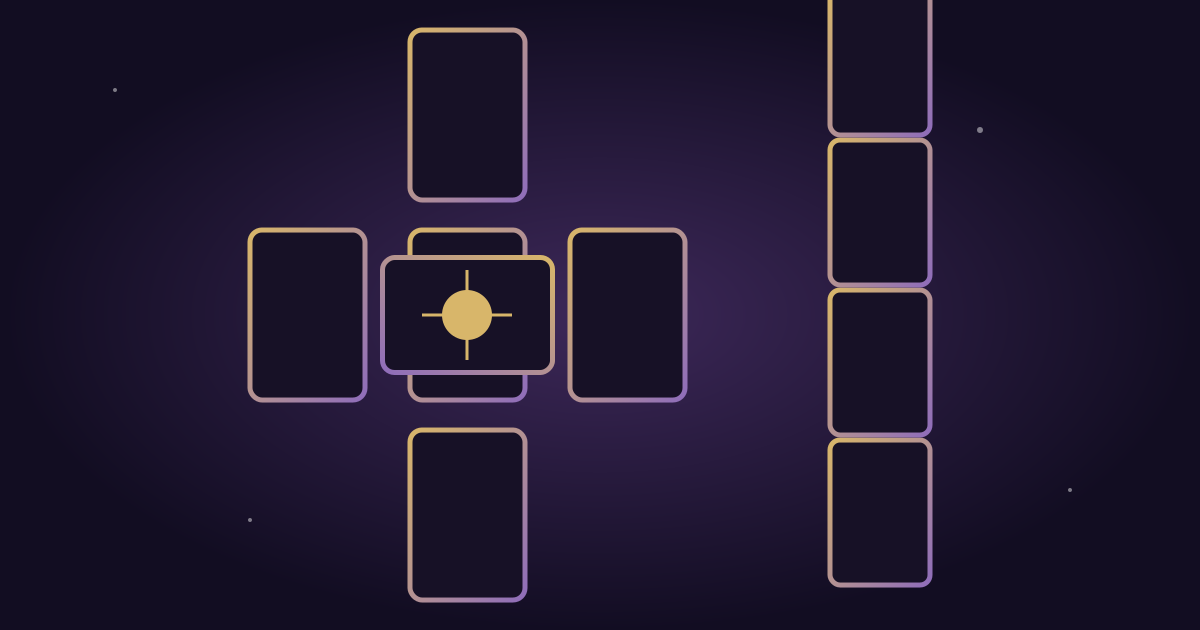
Card one sits at the center. Card two crosses it horizontally. Cards three through six surround that pair: below, left, above, and right. Cards seven through ten form a vertical line to the right, rising from bottom to top. That separate line is commonly called the staff.
The ten positions explained
- Present: the heart of the situation or energy most active now.
- Challenge: what crosses, complicates, tests, or sometimes strengthens the present.
- Foundation: underlying causes, assumptions, or deeper influences.
- Recent past: an influence that is receding but still shapes the question.
- Possibility: the conscious aim, emerging potential, or best currently visible development.
- Near future: the next phase if the present pattern continues.
- Your stance: your role, self-perception, resources, or approach.
- Environment: other people, conditions, and influences outside your direct control.
- Hopes and fears: the outcome you desire, dread, or hold ambivalently.
- Direction: the likely trajectory, not an irreversible verdict.
How to read the spread in order
Start with cards one and two as a sentence: "The situation is this, complicated by that." Then compare the vertical foundation-to-possibility axis and the horizontal past-to-future axis. Read the staff last. It explains how your stance and environment influence the direction shown by card ten.
Before consulting a guidebook, name the repeated suits, numbers, court cards, and Major Arcana. These patterns often explain more than an isolated definition.
Five connections to look for
- Cards one and two: the spread's central tension.
- Cards three and five: what operates underneath versus what you consciously seek.
- Cards four and six: what is fading versus what approaches.
- Cards seven and eight: your agency versus external conditions.
- Cards nine and ten: how expectation may color the likely direction.
A short interpretation example
Imagine the Two of Wands in the present crossed by Eight of Swords. A new direction is being considered, but perceived limits complicate action. The Eight of Pentacles in the foundation suggests the choice rests on skills already built. The Chariot in the near future favors committed movement, while Temperance as the direction favors a measured transition rather than an abrupt leap.
The useful conclusion is not "you will leave your job." It is that preparation and a paced decision may turn uncertainty into movement.
Common mistakes
- Reading card ten as guaranteed destiny.
- Giving every card equal weight instead of finding repetition.
- Asking several unrelated questions in one spread.
- Pulling so many clarifiers that the original pattern disappears.
- Using a complex spread mainly to soothe anxiety through more information.
When to use a Celtic Cross
Choose it when a situation has history, internal conflict, outside influences, and several possible developments. For daily guidance, a yes-or-no question, or one practical next step, use fewer cards. Depth is useful only when it creates clarity.
Frequently asked questions
Is the Celtic Cross good for beginners?
Yes, after you can interpret simple spreads. Keep a position guide nearby and read card relationships before details.
Can I use the Celtic Cross for love?
Yes. Ask about the relationship dynamic, your role, or what supports a healthy decision instead of trying to prove another person's private thoughts.
How many clarifying cards should I pull?
Often none. If one position remains genuinely ambiguous after reading the whole pattern, pull one clarifier with a precise purpose.
How long does the outcome last?
The spread has no universal time frame. Define a period in the question when timing matters, and treat card ten as a direction shaped by present conditions.
Final thoughts
The Celtic Cross becomes readable when you stop treating it as ten small readings. Find the crossed center, trace the two axes, and use the staff to connect agency with circumstances. The result should leave you with a clearer question or action, not dependence on another card.
Related articles
Readings may be generated or enhanced using AI-guided interpretation and are designed as a spiritual and reflective experience.
For entertainment and personal reflection only. Velvet Astral readings are not medical, legal, financial, or mental health advice, and should not be used as a substitute for professional guidance.