Feelings and Mixed Signals
Why Is He Hot and Cold? What Mixed Signals Really Mean
Mixed signals are confusing, but they are rarely random. Understanding the pattern helps you respond from calm instead of anxiety.
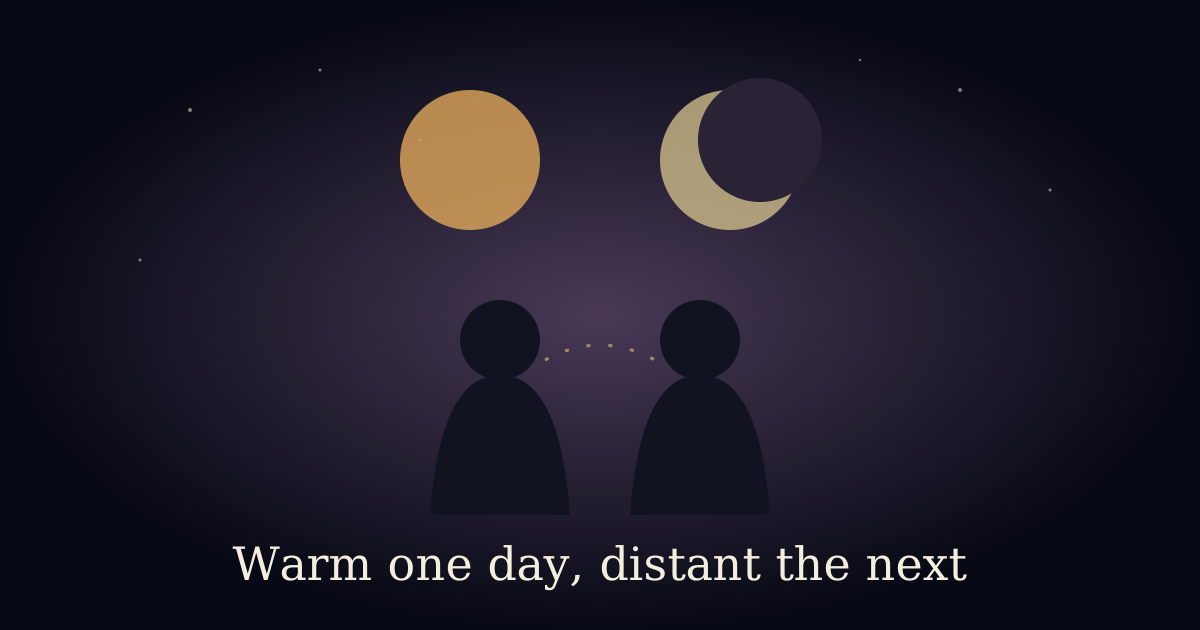
One week he is affectionate, attentive and making plans. The next he is distant, slow to reply and hard to read. Then, just as you start to let go, the warmth comes back. Hot and cold behavior can leave you feeling like you are always waiting for the next shift in weather.
Mixed signals are confusing, but they are not random. They usually come from a conflict inside the other person, between wanting closeness and fearing it, or between enjoying you and not being ready to choose. Understanding the pattern can help you respond from calm instead of anxiety.
Key takeaways
- Hot and cold behavior usually reflects his inner conflict, not your worth.
- The warm phases are real, and so is the distance.
- Intermittent warmth can feel more intense than steady affection, which keeps you hooked.
- You can name the pattern kindly and ask for consistency.
- Consistency is a reasonable need, not a demand for perfection.
What hot and cold looks like
- Long, warm conversations followed by days of short replies.
- Big gestures, then sudden distance after a close moment.
- Plans that are exciting when made and vague when the day comes.
- Jealousy or interest when you pull back, distance when you lean in.
- Saying he wants something serious while acting unsure.
A single quiet day is not a pattern. Hot and cold is the repeated cycle of closeness and withdrawal without real explanation or repair.
10 reasons he may be hot and cold
- Closeness scares him. Intimacy can trigger a need to step back, especially after a vulnerable moment.
- He is unsure what he wants. Ambivalence shows up as alternating effort.
- He likes the attention more than the commitment. The warm phases can be about feeling wanted.
- He is managing other priorities. Work, family or another connection may take his energy in waves.
- He is not over someone else. Old feelings can pull him away just when things with you deepen.
- He reacts to your reactions. If he feels pursued, he may retreat; if he feels you leaving, he may return.
- He struggles with his mood. Stress, anxiety or depression can make connection feel easy one day and impossible the next.
- He avoids difficult conversations. Distance becomes his way of not saying something.
- He is keeping options open. This is a hard possibility, and it deserves an honest conversation.
- He learned love this way. Early experiences can make inconsistent love feel normal to him.
Why mixed signals feel so intense
When warmth is unpredictable, every return feels like a relief and a reward. That cycle of uncertainty and relief can make a connection feel more powerful than one built on steady affection, even when it hurts more.
This intensity is not proof of a deep bond or destiny. It is often the uncertainty itself. If you notice that your mood rises and falls with his replies, the guide to love and attachment may help you separate the feeling from the person.
How to respond to hot and cold behavior
Try not to match his rhythm by pulling away to make him chase or flooding him with messages when he goes quiet. Stay steady and honest instead. In a calm moment you might say: “I really enjoy the time we spend together, and I notice things swing between very close and very distant. I would like to understand what is going on for you.”
Listen to the answer, then watch what follows over the next weeks. If you are not sure the connection has a shared definition at all, read what a situationship is and how to ask for clarity.
When it may be time to step back
Consider stepping back if the pattern continues after an honest conversation, if the cold phases leave you anxious for days, if you have started shrinking your needs to keep the warm phases coming, or if you feel more unsure of yourself the longer it continues.
Stepping back is not a game or a punishment. It is choosing the kind of love that lets you rest. When his distance is part of a broader withdrawal, see why he may be pulling away.
What a reading can show
A love reading can help you look beneath the swings: what may be pulling him toward you, what may be pushing him away, and what you need to feel secure. Sometimes simply hearing the pattern described clearly brings relief.
A reading cannot tell you for certain what he is thinking or guarantee that he will become consistent. Use it as reflection, and give the most weight to the behavior you see over time.
Frequently asked questions
Does hot and cold mean he likes me?
It can mean he has feelings and also something holding him back. Interest without consistency is still incomplete, so look at the overall pattern.
Should I pull away when he goes cold?
Taking care of yourself is healthy. Pulling away only to make him chase usually deepens the cycle.
Can a hot and cold man change?
Yes, when he recognizes the pattern and chooses to work on it. You will see change in steady behavior, not only in promises.
Is hot and cold behavior manipulation?
Not always. Often it comes from fear or ambivalence. When it is used deliberately to keep you off balance, it becomes harmful, and protecting yourself matters most.
How long should I put up with mixed signals?
There is no exact limit, but if months pass without more clarity, the uncertainty itself is an answer worth listening to.
Continue exploring
Related love and relationship guidance
Why Is He Pulling Away? 11 Possible Reasons and What to Do
Distance can come from fear, stress, uncertainty or fading investment. The clearest response begins by observing the pattern without abandoning your own needs.
Read article
What Is a Situationship? Signs, Boundaries and Next Steps
A situationship contains emotional or physical closeness without a shared definition. The central issue is not the label itself, but whether the uncertainty works for both people.
Read article
Love vs Attachment: How to Understand the Difference
Love and attachment often exist together. The useful question is whether the bond allows honesty, freedom and mutual care, or is held together mainly by fear of loss.
Read articleReadings may be generated or enhanced using AI-guided interpretation and are designed as a spiritual and reflective experience.
For entertainment and personal reflection only. Velvet Astral readings are not medical, legal, financial, or mental health advice, and should not be used as a substitute for professional guidance.